
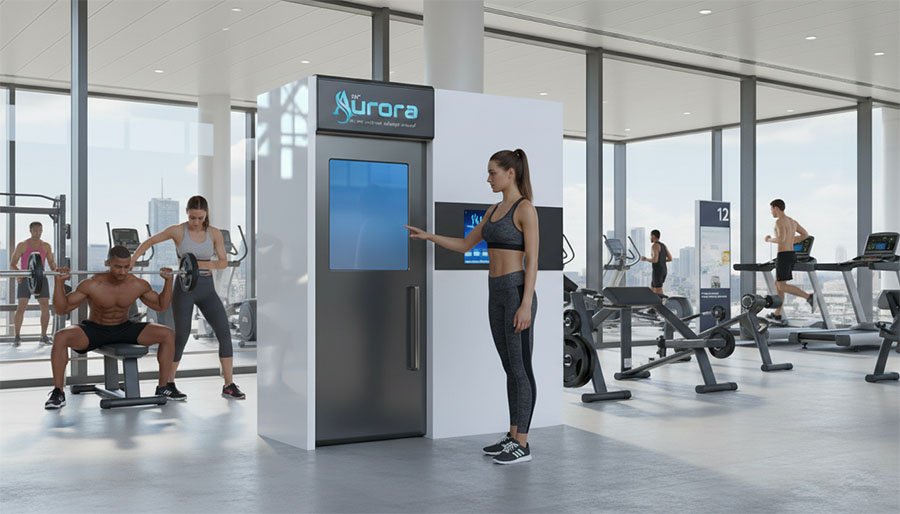

“I’ve heard that electric cryotherapy chambers are safer than nitrogen ones—is that true?” This is one of the most common questions we get from clients who are new to cryotherapy for wellness or recovery.
If you’re in the market for a whole-body cryotherapy chamber, equipment cost is often one of the deciding factors. But beyond the price tag, it’s just as important to understand how each type of cryo chamber works and which option best fits your project, budget, and daily operational needs.
This article breaks down the key differences between nitrogen and electric cryotherapy chamber, helping you make an informed decision for your business or personal use.
Let’s start with a detailed breakdown of the basic technical specifications of the 2 main cryotherapy systems available today.
Cryotherapy Chamber Systems – Technical Specification
| Types | Nitrogen Cryotherapy Chamber | Electric Cryotherapy Chamber |
|---|---|---|
| Coolant / System | Liquid nitrogen – Nitrogen Vapor | Multipe Stage Refrigerants |
| How it Works | Processes liquid nitrogen into a gas/air mix which circulates around the client cabin | The system is cooled through heat exchange between the compressor, condenser, liquid separator, and evaporator, similar to a walk-in freezer |
| Therapy Type | Whole Body Cryotherapy | Full Body Cryotherapy |
| Price Range | $20,000 – $30,000 See Cryotherapy Chamber Cost | $25,000 – $35,000 See Cryotherapy Chamber Cost |
| Setup Costs (Safety & Technical) | No, connect pipe between nitrogen tank and cabin, plug and play | Need electrican to connect the building’s electric cable to the cabin |
| Liquid Nitrogen Consumption | Precool: 0.8 L, Session: 4–5 L | N/A |
| Power Consumption | No need drying, customer experience: 2 kWh, 8h workday, no customer experience: less than 1 kW | 1h: 6–20 KW, 8h workday with saving energy mode and no customer experience: less than 1 kw |
| Electrical Requirements | 220V, single phase | 380V, 3 phase (customzation available) |
| Operating Temperature | -110°C to -180°C (some claim -196°C, not physically possible) | -110°C to -130°C (some claim -110°C, not real temperature in cabin) |
| Equipment Footprint | 890 × 990 × 2430mm | 2100 × 1000 × 2300mm |
| Installation Requirements | Ventilation, LN2 | Access to water (some systems), electrical compliance |
| Lead Time | 15-20 days | 45–50 days |
| Monitoring | Operator, Humidity, Oxygen | Operator |
| Pros | Compact, lower upfront cost, colder temperatures | Whole-body immersion including head, safer, more consistent therapy, no nitrogen handling |
| Cons | Requires nitrogen supply, ventilation and safety protocols, limited size | Higher upfront cost, larger footprint, higher power requirements, longer lead time |
PRO’s & CONs About Nitrogen Cryotherapy Chambers
With so many cryotherapy chamber manufacturers and suppliers on the market, product quality, safety, and services can vary significantly.
Our comprehensive PROs and CONs guide future buyers of cryotherapy equipment, highlighting key standards for safe, effective, and cost-efficient cryotherapy chambers.
Note that some points may not apply to every brand, but this overview helps spa and wellness centers make informed purchasing decisions.
| PROS + | CONS – |
|---|---|
| 30 seconds start-up time, no need to leave idle for hours, flexible operation | Requires liquid nitrogen as a consumable |
| Lower initial investment | Liquid Nitrogen can get expensive in some areas or may be inaccessible. |
| Non-claustrophobic environment | Risk of asphyxiation |
| Treatment Intensity (Balanced cabin temperature recommended) | Risk of frostbite |
| Colder treatment, ranging from -110°C to -180°C. | Requires a ventilation system for gas to be evacuated outside. An oxygen, heart beat, temperature monitor is a must. |
| Small footprint of equipment, small floor loading. | Medium Pressure nitrogen tanks need regular maintenance. |
| Breathing ambient air | The body is exposed only from the neck down. |
Considerations About Nitrogen Cryotherapy Chambers
Choosing the Right Cryotherapy Chamber Manufacturer
With the rapid growth of the cryotherapy industry, the quality, safety, and performance of cryotherapy chambers can vary significantly between manufacturers.
Choosing a professional cryotherapy chamber manufacturer is essential—not only for equipment performance, but also for long-term safety, technical support, and business success.
As a factory with fully in-house hardware and software development, we control every core component of the system. This ensures higher reliability, better system integration, and consistent performance compared to solutions that rely on external systems.
Key Differences Between Cryotherapy Chambers
Just like in the automotive industry, different manufacturers offer different levels of technology and engineering.
When selecting a nitrogen cryotherapy chamber, it is important to evaluate:
- Safety system design, not just temperature claims
- Temperature uniformity inside the cabin
- True cooling performance vs. advertised temperature
- Structural durability and long-term stability
- Training, service, and technical support
Some lower-spec systems may:
- Lack adjustable lifting platforms, limiting usability for different body types
- Use direct nitrogen injection, increasing frostbite risk
- Have uneven airflow, leading to inconsistent treatment results
Our Recommendation
Before investing in a cryotherapy machine, focus on the fundamentals:
- How is user safety monitored in real time?
- Is there body temperature and oxygen level detection?
- Does the system use an integrated evaporator for safe cooling?
- What level of training and after-sales support is provided?
A well-designed system should deliver not only low temperatures, but also safe, stable, and repeatable results.
Liquid Nitrogen Considerations
Operating a nitrogen cryotherapy chamber requires a stable and cost-effective liquid nitrogen supply.
While nitrogen systems offer a relatively low initial investment, long-term efficiency depends on:
- Reliable nitrogen supply
- Consumption per session
- Operational consistency
Our systems are optimized for low liquid nitrogen consumption (approximately 4–5L per session), helping reduce operating costs and improve profitability.
We also support technical coordination during setup, ensuring compatibility with local nitrogen supply conditions.
Safety of Nitrogen Cryotherapy Chambers
Safety is the most critical factor in cryotherapy system design.
Potential risks in traditional systems include:
- Frostbite caused by direct nitrogen exposure
- Oxygen deficiency in enclosed environments
- Uneven temperature distribution
Our Safety Approach
Our cryotherapy chambers are engineered with a multi-layer safety system:
✅ Body temperature monitoring – prevents hypothermia
✅ Blood oxygen monitoring – prevents hypoxia
✅ Integrated evaporator system – avoids direct nitrogen contact
✅ Surrounding airflow design – ensures even cooling
✅ Intelligent control system – real-time system adjustments
This ensures true safety, true cold, and consistent performance.
Business Considerations
Although nitrogen cryotherapy chambers are cost-effective to install, successful operation depends on:
- Selecting the right market and target clients
- Delivering a professional and safe user experience
- Using reliable and easy-to-operate equipment
With the right system, businesses can achieve:
- Lower operating costs
- Better treatment consistency
- Higher customer retention
Why Work With Us
We are a direct cryotherapy chamber manufacturer with:
- Full in-house R&D (hardware + software)
- Complete system integration (no external dependency)
- Customizable solutions for different business models
- Reliable global technical support
👉 Contact us to learn more about our nitrogen cryotherapy chambers and how to build a safe and profitable cryotherapy business.
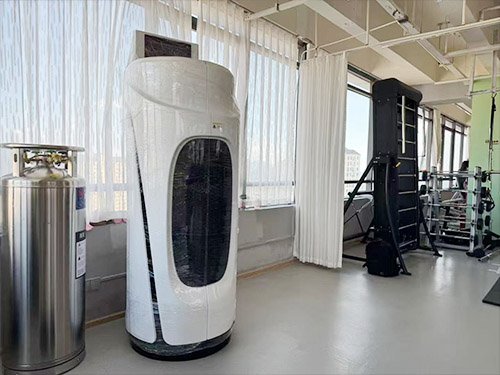
Nitrogen Cryo Chamber
Learn MorePRO’s & CONs About Electric Cryotherapy Chamber
| PROS + | CONS – |
|---|---|
| Full body exposure to cool air | High electricity consumption |
| Does not require liquid nitrogen. | High initial investment |
| Breathable Cabin | Sessions don’t reach temperatures as low as nitrogen systems. Single room electrics can reach -130°C. |
| No gas tanks to maintain | Breathing in cold environment may be uncomfortable |
| The only ventilation system required is for heat extraction. | 2-3 hour startup time |
Considerations About Electric Cryotherapy Chambers
Understanding Electric Cryotherapy Technology
Electric cryotherapy chambers have been used since the 1990s and are based on advanced refrigeration systems. However, for many years, one of the main limitations of electric systems was the lowest achievable temperature.
Today, with advancements in engineering and system integration, high-performance electric cryotherapy chambers are now capable of reaching true ultra-low temperatures required for effective cryotherapy.
Our electric cryotherapy chamber is engineered to achieve real measured temperatures down to -130°C, not just “cold sensation” or perceived cooling, ensuring genuine therapeutic effectiveness.
Single-Room vs Integrated System Design
Traditional electric cryotherapy chambers often rely on multi-room systems to maintain low temperatures and reduce cold air loss.
However, this approach comes with challenges:
- Larger installation space requirements
- Higher system complexity
- Increased maintenance and operational costs
Our system features a fully integrated single-unit design, eliminating the need for multiple rooms while maintaining stable and consistent performance.
Each time the chamber door opens, temperature stability is maintained through optimized system control, ensuring reliable session quality without the inefficiencies of traditional designs.
Airflow Design & Cooling Efficiency
Many conventional electric cryotherapy chambers depend on fan-driven airflow systems to circulate cold air.
This can lead to:
- Uneven temperature distribution
- Strong, uncomfortable airflow on the skin
- Reduced overall treatment experience
Our chamber utilizes a fan-free cooling design, delivering:
✅ More uniform temperature distribution
✅ No harsh direct airflow on the body
✅ Improved comfort during sessions
✅ More stable and controlled cooling environment
This results in a more consistent and premium cryotherapy experience.
Business Considerations
Electric cryotherapy chambers offer a nitrogen-free solution, eliminating the need for liquid nitrogen supply and storage.
However, when evaluating long-term investment, it is important to consider:
- Equipment cost vs. session pricing strategy
- Expected client volume and usage rate
- Annual maintenance and servicing requirements
- Refrigerant lifecycle and replacement costs
Our system is designed to reduce operational complexity with:
- Stable performance and lower maintenance frequency
- Integrated system design (fewer external dependencies)
- Energy-efficient operation
This helps businesses achieve a more predictable and sustainable ROI.
Full Body Exposure & Effectiveness
Electric cryotherapy chambers provide full-body exposure, including the neck area, which may contribute to overall stimulation during the session.
The vagus nerve extends from the brain through the neck and into the body, meaning both full-body and partial-body cryotherapy systems can stimulate large areas of this pathway.
While some discussions suggest additional benefits from head exposure, current research remains inconclusive.
What matters most is:
- Consistent and sufficiently low temperature
- Uniform cooling throughout the body
- Safe and controlled session conditions
Why Our Electric Cryotherapy Chamber Stands Out
- ✅ True -130°C measured temperature (not perceived cooling)
- ✅ Integrated single-unit system (no multi-room complexity)
- ✅ Fan-free design for even and comfortable cooling
- ✅ Stable performance with lower operational complexity
- ✅ In-house developed hardware and control system
👉 Contact us to learn more about our electric cryotherapy chambers and how to build a high-performance, nitrogen-free cryotherapy business.
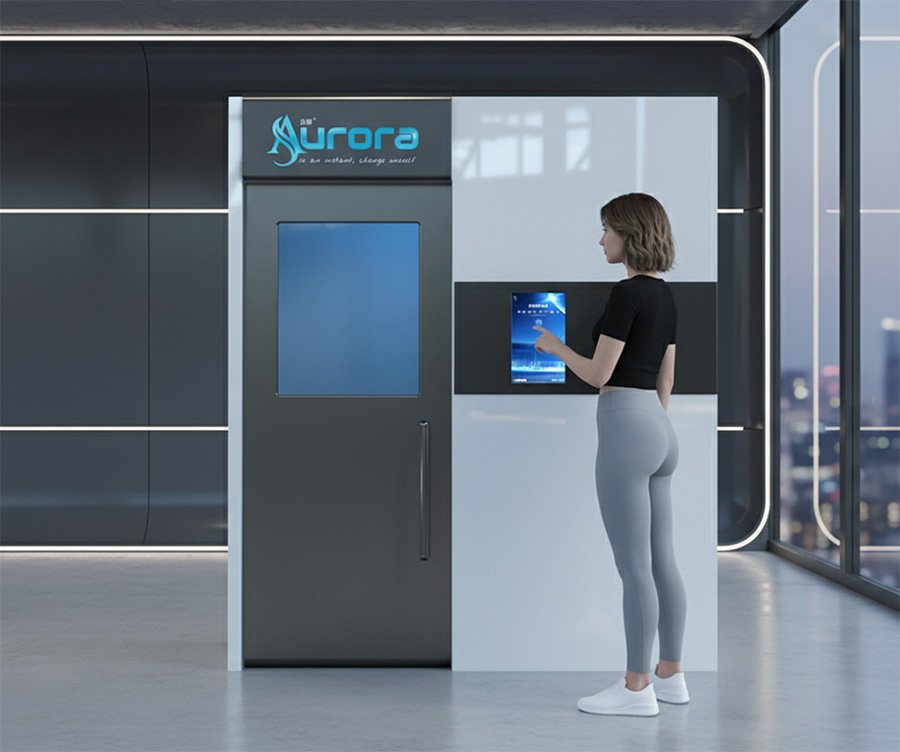
Electric Cryo Chamber
Learn moreWhat Really Matters When Choosing the Right Cryotherapy Chamber
The discussion around electric vs nitrogen cryotherapy chambers often focuses on temperature, safety, and user experience.
Traditional concerns include:
- Electric systems not reaching sufficiently low temperatures
- Nitrogen systems involving liquid nitrogen handling and safety risks
- Differences in exposure, comfort, and session experience
However, with modern technology, high-performance cryo chambers have evolved significantly.
Instead of focusing only on system type, decision-makers should prioritize:
- Real achievable temperature (not marketing claims)
- Safety system design and monitoring
- Temperature uniformity and session quality
- Operational cost and long-term reliability
- Ease of use and business scalability
