
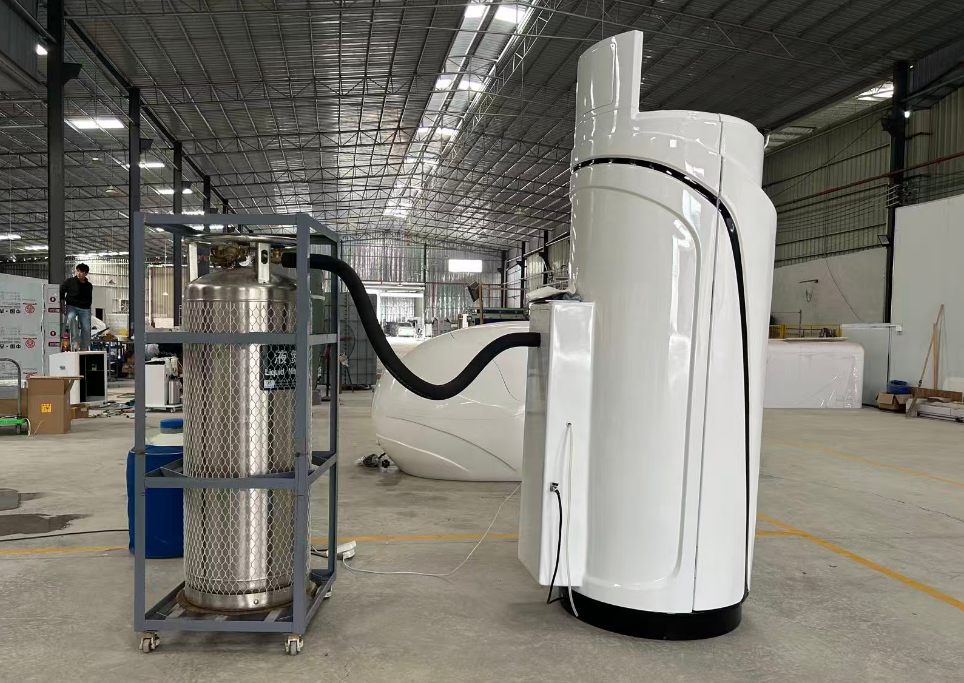

Marco, an equipment procurement manager in Milan, Italy, recently broke his long-standing purchasing habit—on his cryotherapy machine procurement list, he crossed out all European brands for the first time and chose a Chinese-made device instead.
“I originally just wanted to try reducing procurement costs, but I didn’t expect to gain such a pleasant surprise.”
Marco’s honesty reflects a clear trend in today’s global market: more and more overseas clients are choosing Chinese equipment. They have already moved beyond the single perception of “low price” and are instead attracted by its scenario-driven technological innovation, its ability to solve real pain points, and its overall cost-performance value.
In the past, “Made in China” in overseas markets was often associated with “cost-effectiveness”—low price, but outdated technology and rough user experience, making it difficult to enter the high-end market. Today, however, Chinese equipment represented by subzero cryotherapy machine is breaking through this stereotype. By precisely addressing real-world usage scenarios and customer pain points, it is achieving a transition from “price advantage” to “technology advantage,” turning overseas clients from “reluctant acceptance” to “proactive choice.”
1: Gyms / Sports Rehabilitation Centers
Dual Demand for Safety and Efficiency — Chinese Cryotherapy Machine Provides a Precise Solution
In Europe and the United States, cryotherapy machine have become standard equipment in gyms and sports rehabilitation centers. Whether for post-training recovery of professional athletes or muscle relaxation for fitness enthusiasts, they are widely used. However, overseas clients have long faced two major pain points: safety risks and low operational efficiency.
Previously, a tragic accident occurred at a gym in Paris—liquid nitrogen leakage in a cryotherapy machine caused the death of an employee, left one customer unconscious, and injured three others during rescue. The root cause was flaws in safety protection design and the lack of effective warning systems.
Similarly, in 2015, a 24-year-old woman in Las Vegas died from asphyxiation after using a cryotherapy machine alone without assistance.
These incidents have created significant concerns among gym operators regarding equipment safety. Although European brands claim compliance with safety standards, they often fail to optimize safety design for real usage scenarios. Additionally, slow maintenance response further increases operational risks.
At the same time, low efficiency is another major issue.
For gyms, high-frequency usage means that longer waiting times lead to poorer customer experience and reduced facility utilization. For professional rehabilitation centers, post-exercise recovery time is critical—slow cooling speed and imprecise temperature control directly affect recovery results.
European cryotherapy chambers typically take 1–2 minutes to cool down and have relatively large temperature deviations, making them unsuitable for high-frequency, high-efficiency use.
Chinese cryotherapy machine, however, precisely address these issues.
The Chinese model Marco experienced at an exhibition can reach -120°C within 30 seconds, far exceeding European competitors. Its temperature control accuracy reaches ±1°C, allowing precise adjustments for different users and avoiding discomfort caused by improper temperatures.
More importantly, Chinese equipment features comprehensive safety upgrades, including a seven-layer safety protection system: liquid nitrogen leakage alerts, real-time oxygen monitoring, internal emergency door opening, and more. These features eliminate the biggest safety concerns. Even without assistance, users can exit the chamber at any time, fundamentally preventing accidents such as asphyxiation.
“As many as dozens of clients use our cryotherapy chamber every day. Chinese equipment not only cools faster but has never had any safety issues—both staff and clients feel completely at ease,” said the owner of a chain gym in Milan.
The safety design tailored to real usage scenarios, combined with a price that is only one-third of European brands, significantly reduces operating costs—this is the core reason they abandoned European suppliers.
2: High-End Wellness Centers / Private Clinics
Dual Pursuit of Experience and Aesthetics — Chinese Machine Achieves an Upgrade
In high-end wellness centers and private clinics in the Middle East and Europe, cryotherapy chambers are no longer just “rehabilitation tools.” They have become key facilities for enhancing service quality and reinforcing a premium brand image.
The pain points for these clients go beyond safety and efficiency. They focus on user experience, design aesthetics, and intelligent functionality. European brands, despite positioning themselves as high-end, often suffer from rigid design and lack of smart features, failing to meet personalized demands.
A procurement manager from a luxury wellness center in Dubai noted that their previous European equipment had complicated operation requiring professional staff assistance, leading to poor user experience. The design was outdated, and interior materials felt low-end, clashing with the center’s premium positioning.
More critically, European equipment lacked personalization, making it impossible to tailor cryotherapy programs to individual users’ physical conditions and needs.
Chinese cryotherapy chambers, however, have made breakthroughs in intelligence and design quality.
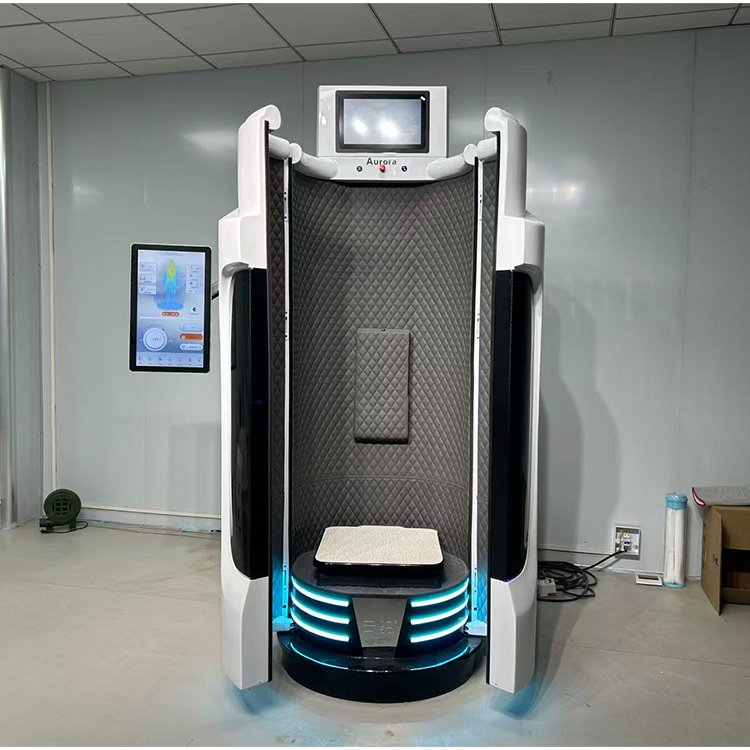
For example, a Chinese model exported to Dubai features handcrafted interior finishing, delivering a refined texture and a sleek, modern appearance that fits perfectly with high-end environments.
It is equipped with a tablet-based remote control system, allowing users to independently adjust temperature and session duration—eliminating the need for operator assistance while enhancing privacy and convenience.
Additionally, built-in intelligent monitoring systems can track body temperature, heart rate, and other data in real time, automatically generating personalized cryotherapy programs. Whether for anti-aging wellness clients or post-surgery patients, it delivers precise and comfortable experiences.
Chinese manufacturers have also solved the long-standing issue of slow after-sales response and difficult spare parts supply.
As industry experts point out, overseas markets lack the fast and flexible spare parts systems seen in China. European brands often have delivery cycles lasting several months, with inconsistent models, severely impacting operations when failures occur.
Chinese manufacturers, however, have established overseas spare parts warehouses, offering 24-hour service response and reducing delivery time to 7–15 days, along with on-site repair services—completely eliminating clients’ concerns.
3: Research Institutions / Medical Facilities
Dual Standards of Precision and Reliability — Chinese Machine Gains Recognition
For research and medical institutions, precision, stability, and data reliability directly impact research outcomes and clinical results. These have long been the strengths of European brands due to their historical R&D advantages.
However, this landscape is now changing.
The Lvhang Aerospace Research Institute, specializing in aerospace medicine and human factors engineering, has extremely strict requirements for equipment accuracy and data collection. Previously reliant on European devices, they found significant data deviations and insufficient stability.
Chinese cryotherapy machine changed this situation.
Equipped with high-precision sensors, they can collect real-time data with an error margin controlled within 0.5°C, while maintaining stable operation for 72 hours continuously without failure, fully meeting rigorous research standards.
In clinical applications, Chinese equipment has also gained recognition.
A U.S. cancer treatment center reported that after introducing Chinese cryotherapy machine for post-operative recovery, patients experienced reduced inflammation, pain, and swelling, faster recovery, and fewer complications.
European cryotherapy machine, by contrast, is not only expensive but also less adaptable to different clinical scenarios.
Marco concluded after his experience:
“I thought Chinese equipment was just cheaper. But when I saw the cooling speed, intelligent control, and structural design, I realized the technology is completely different.”
This is no longer just Marco’s personal view—it represents the growing consensus among global clients.
From “Price Advantage” to “Value Advantage”: The Global Breakthrough of Chinese Manufacturing
In the past, overseas clients chose Chinese equipment out of necessity—to reduce costs while accepting lower quality.
Today, they choose it proactively—recognizing its technical strength, scenario adaptability, and overall value.
This shift reflects the continuous upgrade of Chinese manufacturing:
from quantity to quality, from imitation to innovation, from meeting basic needs to delivering exceptional experiences.
For overseas clients, choosing Chinese cryotherapy machine means not only lower procurement costs, but also greater efficiency, enhanced safety, better user experience, and more reliable after-sales service—this is the true core competitiveness.
For Chinese cryotherapy machine manufacturers, this recognition is both validation and motivation, driving continuous improvement in technology, scenario adaptation, and global service systems.
Looking ahead, as Chinese technology continues to advance and international service networks expand, more clients like Marco will abandon traditional European brands and turn to Chinese solutions.
Chinese manufacturing is moving beyond being merely a “large manufacturing country” to becoming a true global manufacturing powerhouse—winning trust worldwide through technology and capability.
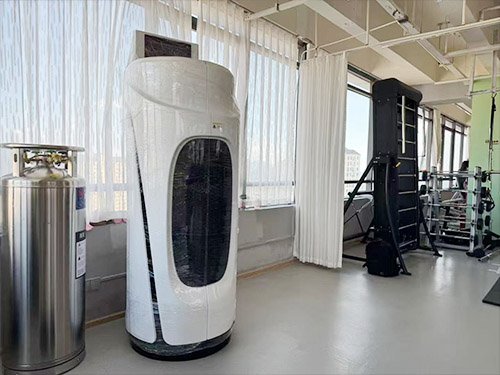
Cryotherapy Machine
Learn More