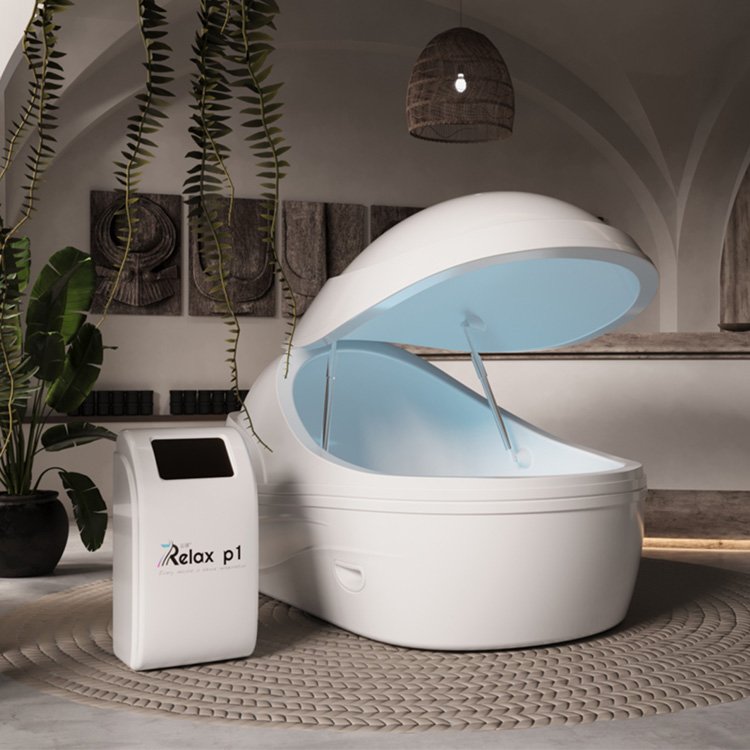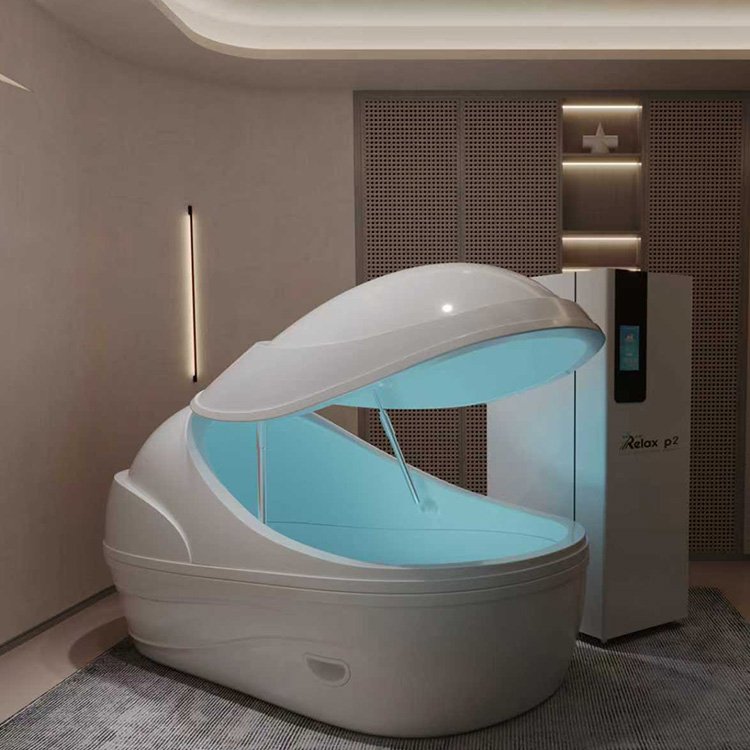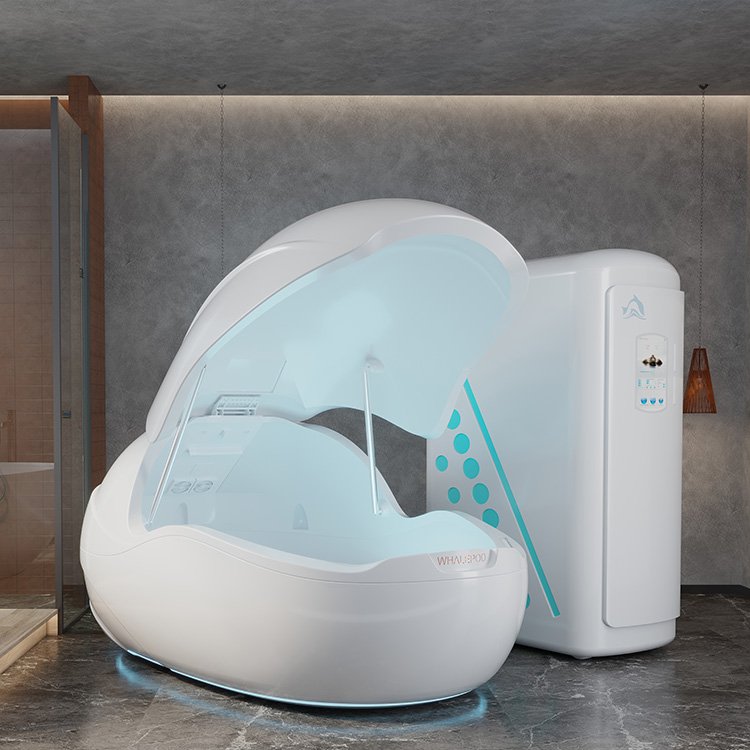
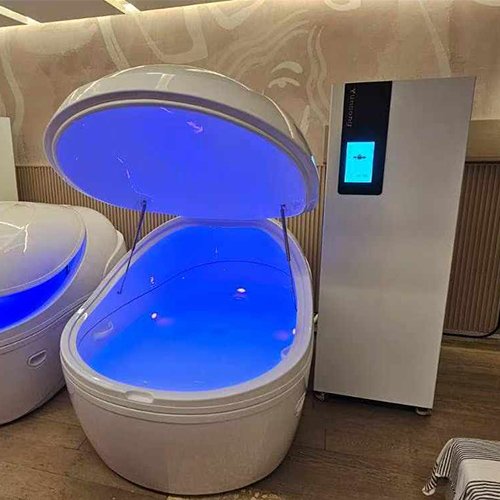

A recent experience shared by one of our new customers is a cautionary tale for anyone considering investing in a floatation tank, water flotation device, or sensory deprivation bathtub for a commercial spa or wellness center.
To reduce his initial investment, the customer chose the lowest-priced floatation tank available from a small workshop manufacturer. Like many buyers, he assumed that every floater water tank looked similar and that the cheapest option offered the best value.
However, in less than six months of normal use, the cabin developed severe yellowing and discoloration. What had once looked like a premium water flotation device quickly appeared old, worn, and inexpensive, significantly diminishing the overall appearance of his spa.
Unfortunately, the cosmetic deterioration was only the beginning.
When the customer contacted the supplier for warranty support, no one responded. Messages were ignored, phone numbers became unreachable, and every promise of warranty coverage and lifetime after-sales service vanished overnight. A costly investment lost all support within half a year, leaving the owner responsible for every repair and replacement expense.
Many buyers focus solely on price, believing that every floatation tank is built the same. In reality, the water pods spa industry follows the same principle as every other manufacturing sector—you get what you pay for. Rapid yellowing is not normal aging; it is often the result of inferior materials and poor manufacturing practices.
Why Do Cheap Floatation Tank Turns Yellow So Quickly?
Some low-cost manufacturers claim that “all materials eventually turn yellow.” That simply isn’t true.
A professionally manufactured floatation tank should retain its appearance for years under normal operating conditions. Whether it is installed in a luxury water pods spa, wellness center, or hotel, premature yellowing is usually caused by poor material selection and inadequate manufacturing processes.
1. Inferior Raw Materials
Premium water flotation devices are manufactured using virgin engineering-grade polymers enhanced with UV stabilizers and anti-oxidation additives. These materials maintain a stable molecular structure and resist sunlight, oxidation, humidity, and temperature fluctuations.
Low-cost floater water tanks, however, are often manufactured using recycled plastics containing impurities and little or no anti-aging additives.
2. Accelerated Oxidation
Float tanks operate continuously in environments characterized by high humidity, salt concentration, and regular exposure to light. Inferior materials undergo photo-oxidation much faster, resulting in yellowing, surface roughness, chalking, and gradual structural degradation.
Without proper protective coatings, moisture and salt continue penetrating the material, accelerating aging and potentially leading to cracks, leaks, and long-term reliability issues.
The Biggest Risk When Buying a Floatation Tank Isn’t the Yellowing
Yellowing is visible.
Buying a poorly manufactured water flotation device from an unreliable supplier is far more expensive in the long run.
Many ultra-low-priced float tanks are produced by small assembly workshops with no real manufacturing capability, no R&D team, and no dedicated service department.
These companies typically purchase all major components from third-party suppliers and simply assemble them together with minimal quality control. Their software and control systems are generic third-party solutions rather than proprietary developments, making upgrades, customization, and long-term technical support extremely limited.
Their business model is simple: compete on the lowest price, sell quickly, and move on. Once problems arise, many disappear entirely.
Customers may receive basic assistance immediately after purchase, but when material degradation or equipment failures occur months later, warranty promises become meaningless, and every maintenance expense falls entirely on the owner.
Established manufacturers operate very differently.
A professional factory controls hardware production, software development, quality assurance, and after-sales service under one roof. Because their reputation depends on long-term customer satisfaction, they remain available long after installation—from commissioning and operator training to maintenance guidance, warranty repairs, and technical troubleshooting.
How to Choose a High-Quality Floatation Tank for Your Spa
A commercial floatation tank is a long-term investment. Whether you’re opening a water pods spa, wellness clinic, rehabilitation center, or installing a sensory deprivation bathtub for premium relaxation services, durability and dependable after-sales support matter far more than saving money upfront.
Choosing the cheapest option often results in accelerated aging, expensive repairs, no warranty protection, and premature replacement. The hidden lifetime cost can easily exceed the initial savings.
Keep these three principles in mind:
1. Understand Why It’s Cheap
Price differences rarely represent excessive profit margins. They usually reflect differences in engineering, manufacturing quality, material selection, quality control, and product development.
If a float tank is priced significantly below the market average, compromises have almost certainly been made—whether in materials, proprietary technology, production standards, components, or inspection procedures.
2. Evaluate Engineering, Not Appearance
Don’t judge equipment by its exterior.
Focus instead on manufacturing quality, structural design, safety engineering, and the materials used in critical components—especially those exposed to salt water. Purpose-built designs for high-salinity environments dramatically reduce corrosion, aging, and long-term maintenance costs.
3. Verify the Manufacturer’s After-Sales Capability
Choose an established factory with real production facilities, long-term industry experience, and a proven service system. Confirm warranty policies, technical support procedures, and response times before purchasing.
Avoid suppliers without permanent manufacturing operations or dedicated after-sales teams.
The Real Cost Isn’t the Equipment—It’s Buying Twice
The biggest expense isn’t purchasing a float tank.
It’s paying repeatedly for poor-quality equipment, unexpected repairs, and nonexistent customer support.
Reliable materials, stable performance, and long-term technical service deliver the highest value over the equipment’s lifetime.
Why Choose Yuncong Floatation Tanks?
If you’re looking for a float tank that is durable, safe, and backed by reliable long-term support, Yunchong Float Tanks are built with those priorities in mind.
We independently develop and manufacture both the hardware and software in-house. We do not rely on OEM relabeling or generic third-party platforms. Every stage—from engineering and production to quality control—is managed internally to ensure consistent quality.
Because float tanks operate in highly humid, high-salinity environments, we have specifically redesigned every component that comes into contact with salt water. Instead of conventional metal parts, we use custom-engineered non-metallic components that eliminate corrosion, rust, contamination, and premature deterioration commonly found in conventional designs.
Our float tanks also feature a comprehensive water-and-electricity isolation system, completely separating electrical systems from water pathways to minimize the risk of leakage, electrical hazards, and water intrusion.
The result is a commercial floatation tank built for long-term durability, dependable safety, and reliable after-sales support. Whether you’re operating a water pods spa or expanding your wellness business with a premium water flotation device, Yunchong helps you avoid the hidden costs commonly associated with low-priced equipment.